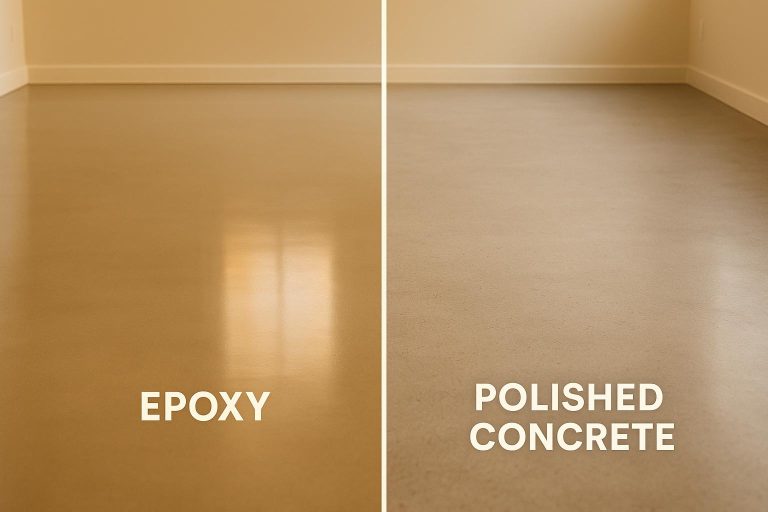
Epoxy floors are known for their durability, lasting anywhere from 5 to 20 years depending on factors like location, usage, and maintenance. Here’s a quick breakdown of what to expect:
- Residential garages: 15–20 years
- Basements/workshops: 12–18 years
- Retail spaces: 8–15 years
- Industrial facilities: 5–12 years
- Healthcare settings: 10–15 years
Key factors affecting lifespan include installation quality, traffic levels, and environmental conditions. Professional installation and regular upkeep, like cleaning and timely repairs, can significantly extend the life of your epoxy floor. For heavier use, recoating every few years can help maintain durability and appearance.
How Long Does Epoxy Flooring Really Last?
How Long Epoxy Floors Last
The durability of epoxy floors depends largely on where they’re installed and how they’re used. These factors help set realistic expectations for both their longevity and the maintenance they might require.
Average Lifespan by Location Type
- Residential garages: Typically last 15–20 years. The controlled environment and moderate levels of vehicle and foot traffic contribute to their extended lifespan.
- Basements and workshops: These floors generally hold up for 12–18 years. While they avoid heavy traffic, they can be affected by temperature swings and humidity changes, especially in areas with harsh winters or humid summers.
- Commercial retail spaces: Expect a lifespan of 8–15 years, depending on traffic levels. High-end stores with lighter foot traffic may see their floors last closer to 15 years, while busier stores like grocery chains might need repairs or replacement after 8 years due to constant wear from foot traffic, shopping carts, and frequent cleaning.
- Industrial warehouses and manufacturing facilities: These environments are the toughest on epoxy floors, with typical lifespans ranging from 5–12 years. Heavy machinery, forklifts, chemical spills, and round-the-clock operations take their toll. Even so, epoxy outperforms alternatives like painted concrete, which often lasts only 1–3 years under similar conditions.
- Healthcare facilities: Lifespans here fall between 10–15 years. While these floors endure constant foot traffic and regular cleaning with strong disinfectants, they don’t face the heavy equipment loads common in industrial settings.
These estimates can vary further based on the quality of installation and environmental conditions, as explained below.
Expected Lifespan Range
In general, epoxy floors last anywhere from 10–20 years. In high-stress environments, their lifespan may be closer to 5–10 years, while in well-maintained, low-traffic areas, they can endure for 15–25 years.
Several factors influence where your floor will fall within this range:
- Climate: UV exposure, temperature fluctuations, and humidity levels can all impact the coating. Stable conditions with minimal moisture intrusion can help extend the floor’s lifespan.
- Installation quality: Proper preparation of the concrete substrate is crucial. Floors installed on well-prepared surfaces tend to last significantly longer.
- Traffic levels: The amount and type of traffic make a big difference. For example, a residential garage with light daily use will outlast a commercial loading dock constantly exposed to forklifts and heavy equipment.
Up next, we’ll dive deeper into how these variables directly impact the performance of your epoxy flooring.
What Affects Epoxy Floor Lifespan
When it comes to how long epoxy floors last, several key factors come into play. The quality of installation, how the floor is used, and the surrounding environmental conditions all contribute to the lifespan of your investment.
Installation Quality and Professional Application
A durable epoxy floor starts with proper preparation. This involves grinding or shot-blasting the surface, testing for moisture in the concrete, removing debris, filling cracks, sanding uneven spots, and ensuring the surface is completely free of contaminants.
"The foundation of a long-lasting floor starts with a flawless installation. Improper surface preparation, incorrect mixing ratios, or skipping curing steps can significantly shorten your floor’s life."
– Everlast Epoxy
Hiring professionals for the job can make a world of difference. Experienced installers know how to prepare the surface correctly, use high-quality materials, and apply the right number of coats. They also follow precise methods for mixing, applying, and curing the epoxy to ensure a strong, lasting bond. On the other hand, DIY installations often fall short due to improper preparation or incorrect mixing, which can lead to reduced durability.
"While the prospect of DIY projects might seem like an attractive, less costly option, the truth about epoxy floor installation is that it’s a task best left to professionals."
– Xpedite Coatings
Traffic and Usage Patterns
How much and what type of activity your floor endures plays a big role in its wear and tear. Regular foot traffic can slowly wear down the surface, while rolling loads – like carts or machinery – can cause more noticeable abrasion. In industrial settings, heavy equipment and repetitive loads can speed up wear, leading to issues like chipping or delamination. Even occasional impacts, such as dropped tools, can damage the surface if not addressed promptly.
Climate and Environmental Conditions
The environment around your epoxy floor also impacts its longevity. For example, frequent temperature changes can cause the substrate and coating to expand and contract, potentially leading to cracks and weakened adhesion. Moisture is another major factor – whether it’s present during installation or comes from ongoing exposure, it can interfere with curing and contribute to delamination, especially in areas like basements or ground-level slabs.
Prolonged exposure to UV light can degrade epoxy over time, causing yellowing, chalking, or surface deterioration. Similarly, exposure to harsh chemicals – like disinfectants in medical facilities or industrial cleaners – can weaken the epoxy, leading to etching or discoloration. Maintaining stable environmental conditions during installation and throughout the floor’s life is key to preserving its performance.
sbb-itb-13ef811
How to Make Epoxy Floors Last Longer
Once installed, the lifespan of epoxy flooring doesn’t just depend on environmental factors or the quality of the installation. Proper upkeep plays a huge role in ensuring your floors stay looking great and performing well for years.
Daily Cleaning Tips
To keep your epoxy floors in top shape, make daily cleaning a habit. Use a soft-bristle broom or a vacuum with a soft brush attachment to remove dirt and debris that could scratch the surface. For deeper cleaning, mop weekly with warm water and a pH-neutral cleaner. In areas with heavy foot traffic, you might need to mop more often. Stick to soft mops to avoid causing any damage.
Stay away from harsh cleaning agents like ammonia, vinegar, bleach, or solvents, as these can dull the floor’s glossy finish. Spills should be cleaned up right away – especially battery acid, which needs to be neutralized with a baking soda solution before wiping it away. For stubborn stains, gently scrub the area with a soft cloth or sponge and a mild cleaning solution. Oil stains? An eco-friendly degreaser applied with a soft cloth should do the trick.
After mopping, always rinse and dry the floor thoroughly to avoid water spots or lingering moisture. Regular cleaning not only keeps your floor looking good but also helps you catch early signs of wear or damage.
Identifying and Repairing Early Damage
Keep an eye out for signs of wear like cracks, chips, peeling, or discoloration. Small chips or scratches can be fixed with a matching epoxy repair kit. If you notice the epoxy starting to separate from the concrete (a process called delamination), it’s time to call in professionals. This issue often points to underlying problems like moisture or poor adhesion.
Pay extra attention to areas with heavy foot or equipment traffic, as they’re more likely to show early signs of damage. Addressing these issues quickly helps prevent them from turning into bigger problems down the road.
Recoating and Added Protection
Recoating your epoxy floor every few years can bring back its shine and reinforce its durability. Before applying a new coat, make sure the surface is thoroughly cleaned and prepped. Using a compatible coating is crucial – if you’re unsure about the type of epoxy already on your floor, consult a flooring expert to avoid adhesion issues.
For added protection, consider placing heavy-duty mats, rugs, or furniture pads in high-traffic areas or under heavy furniture. These simple steps can help prevent scratches, dents, and other wear.
With regular care and a little attention to detail, your epoxy floors can maintain their durability and appearance for years to come.
Key Points About Epoxy Floor Lifespan
The lifespan of epoxy flooring depends heavily on professional installation, regular maintenance, and choosing the right type of epoxy system for your needs. These factors lay the groundwork for the best practices discussed below.
As mentioned earlier, proper installation is essential to prevent problems like peeling or cracking, which can occur within just a few years if not done correctly.
Best Practices for Long-Lasting Epoxy Floors
Skilled installers rely on precise techniques and select epoxy systems that match the specific usage and environmental conditions to ensure durability.
Choosing the right epoxy system is equally important. For example, high-performance commercial epoxy systems are ideal for warehouses, while quartz-filled or flake systems work better for residential garages. If you’re looking for a bold, eye-catching finish, metallic epoxy can deliver that, but it requires a different maintenance routine compared to polyaspartic topcoats.
Regular maintenance also plays a big role in extending the life of your epoxy floor. Cleaning up spills immediately helps protect the surface from damage. Routine care might include resealing or waxing as needed, and addressing deeper scratches early prevents them from turning into bigger, more expensive problems. These steps can significantly reduce the likelihood of needing a full replacement.
Why Choose Restore Custom Coatings?

Local expertise can make a big difference when it comes to tailoring solutions to specific environmental challenges. Restore Custom Coatings specializes in maximizing the lifespan of epoxy floors in Wesley Chapel, FL. Their team understands the unique challenges posed by Florida’s high humidity and other local factors, ensuring your floor performs well over time.
They offer a wide range of epoxy solutions, including flake systems, metallic finishes, and polished concrete, all designed with durability in mind. Plus, their lifetime written warranty provides added confidence in the quality of their work and protects your flooring investment.
With one-day installation options and customizable designs, Restore Custom Coatings simplifies the process of choosing and installing the perfect epoxy system. Their local knowledge ensures they can handle challenges specific to Wesley Chapel, from managing high humidity to accommodating heavy foot traffic in both residential and commercial spaces.
Additionally, their professional services go beyond installation. They can identify potential issues early and provide preventive maintenance tips, helping your floors stay in excellent condition for years to come.
FAQs
How can I maintain my epoxy floors to make them last longer?
To keep your epoxy floors in top shape for years, a little routine care goes a long way. Start by sweeping or vacuuming frequently to clear away dirt and debris that could scratch the surface. Once a week, mop with warm water and a gentle, non-abrasive cleaner to maintain their shine. Don’t let spills linger – clean them up right away to avoid potential stains or damage. By sticking to these straightforward habits, your epoxy floors can stay both durable and visually appealing.
How does proper installation impact the lifespan of epoxy flooring?
The lifespan of epoxy flooring heavily depends on the quality of its installation. Key elements like meticulous surface preparation, precise material mixing, and sufficient curing time are essential for ensuring the floor’s durability. Missing any of these steps can result in issues like peeling, cracking, or early wear and tear.
To get the most out of your epoxy floors, it’s important to hire skilled professionals who adhere to proven installation methods. When done correctly, epoxy flooring can handle heavy use while keeping its look intact for years.
What environmental factors can impact the durability of epoxy flooring?
Environmental factors play a big role in determining how long epoxy floors can hold up. For instance, chemical exposure – whether from industrial spills or common household substances – can gradually wear down the surface. Similarly, UV light can take a toll on epoxy in outdoor or sunlit areas, causing discoloration and weakening its durability over time.
Another important factor is moisture levels. Excessive humidity or water exposure can interfere with the adhesion of epoxy, ultimately shortening its lifespan. Add to that temperature fluctuations – extreme heat or cold can challenge the performance of epoxy flooring, especially if it wasn’t installed with the specific environment in mind.
By addressing these factors during installation and regular maintenance, you can significantly extend the life of your epoxy floors, keeping them in great condition no matter the setting.