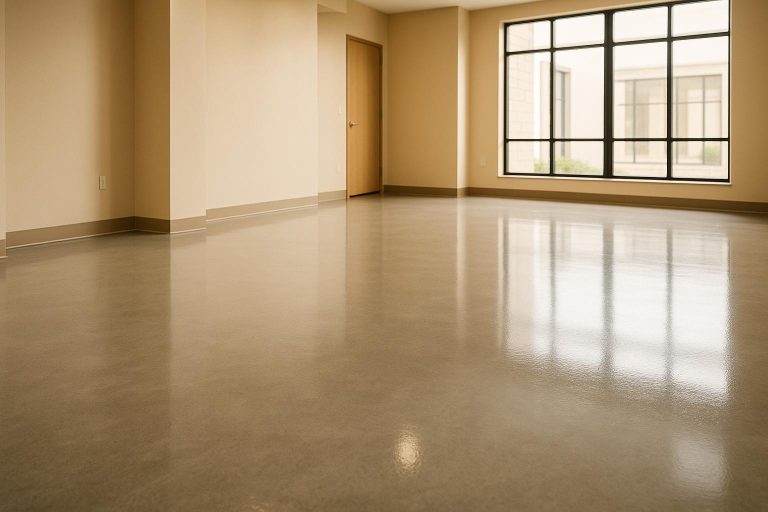
When choosing between epoxy flooring and polished concrete, the decision depends on your space, budget, and priorities. Here’s a quick breakdown:
- Epoxy flooring: Best for spaces needing chemical resistance, vibrant designs, and seamless surfaces. Ideal for garages, kitchens, and industrial areas. Costs range from $5–$12 per square foot.
- Polished concrete: Great for a sleek, natural look with minimal upkeep. Perfect for modern homes, offices, and warehouses. Costs are higher upfront, averaging $4,500 per project.
Quick Comparison
| Feature | Epoxy Flooring | Polished Concrete |
|---|---|---|
| Durability | High, but repairs can be complex | Very high, easy to maintain |
| Customization | Extensive (colors, patterns, metallic) | Limited (natural tones, sheen levels) |
| Slip Resistance | High (with textured finishes) | Moderate (can be slippery when wet) |
| Chemical Resistance | Excellent | Good (may stain with acids) |
| Cost | $5–$12 per sq. ft. | Higher upfront, $4,500 average |
| Installation Time | 1–3 days | 3–5 days |
Key Takeaway: Go with epoxy for bold designs and chemical resistance. Choose polished concrete for a natural look and low maintenance.
Epoxy Floor vs Polished Concrete | Any Difference?
Pros and Cons: Epoxy vs Polished Concrete
The table below highlights the key advantages and drawbacks of epoxy flooring and polished concrete, offering a clear comparison for decision-making.
Side-by-Side Comparison Table
| Factor | Epoxy Flooring | Polished Concrete |
|---|---|---|
| Installation Time | Often finished within a day under ideal conditions; complex projects may take up to 3 days | Typically requires 3–5 days due to multi-step grinding and polishing |
| Chemical Resistance | Excellent – resists oils, acids, and solvents effectively | Good – some acidic substances may cause staining |
| Slip Resistance | High, especially with textured finishes | Moderate – can become slippery when wet |
| Temperature Sensitivity | May yellow under UV exposure and is sensitive to extreme heat | Generally unaffected by UV or temperature changes |
| Repair Requirements | Repairs can be tricky, often needing sanding and recoating | Minor scratches and scuffs are easily buffed out |
| Customization Options | Extensive – wide range of colors, patterns, and metallic finishes | Limited – primarily natural tones with staining options |
| Moisture Tolerance | Excellent moisture barrier when applied correctly | Requires a sealer to improve moisture resistance |
| Initial Investment | Lower upfront cost in most cases | Higher due to specialized labor and equipment |
| Maintenance Frequency | Low – occasional deep cleaning needed | Very low – routine sweeping and damp mopping suffice |
Detailed Analysis of Each Factor
Epoxy flooring is designed for durability across various settings, but areas with heavy traffic may need occasional maintenance to address wear. On the other hand, polished concrete can last over three decades with proper care, making it a long-term solution.
When it comes to chemical resistance, epoxy forms a tough, impermeable layer that protects against oils, gasoline, and common cleaning agents. This makes it a great choice for spaces like kitchens, auto shops, and manufacturing facilities. Polished concrete, while resistant to most substances, may gradually show etching or staining when exposed to acidic materials over time.
Maintenance is another area where these two options differ significantly. Epoxy floors require regular cleaning with pH-neutral products, but any major damage often calls for sanding and recoating larger sections to maintain a consistent appearance. Polished concrete, in contrast, is relatively low-maintenance, with occasional resealing every few years further enhancing its resilience.
Aesthetics also set these materials apart. Epoxy flooring offers virtually endless customization possibilities, from vibrant colors to intricate patterns and even metallic effects. Polished concrete leans toward a more industrial, natural look, with its appearance largely influenced by the concrete’s aggregate and the depth of the polish.
For environmental performance, epoxy performs best in controlled indoor spaces with stable temperature and humidity levels. However, it can become slippery when wet unless textured additives are used. Polished concrete handles temperature fluctuations well and works effectively in both indoor and covered outdoor areas, though it too can pose a slip risk in wet conditions.
As we move forward, we’ll delve deeper into cost and lifespan to help you make the most informed decision.
Cost and Lifespan Analysis
When deciding on flooring, it’s essential to weigh the financial commitment of each option. Both epoxy and polished concrete come with distinct upfront costs that can influence your budget over time.
Installation Costs
Epoxy flooring typically costs between $5 and $12 per square foot for professional installation, with the average sitting around $7.50 per square foot. For epoxy garage floors, the national average is around $2,227, with costs ranging from $1,447 to $3,006. For a 250-square-foot garage, you’re looking at an estimated cost of $750 to $3,000.
Material costs vary depending on the type of epoxy you choose:
- Water-based epoxy: $30–$50 per gallon
- Solvent-based epoxy: About $45 per gallon
- 100% solid epoxy: Up to $150 per gallon
Labor costs add another $1 to $7 per square foot on top of material expenses.
Polished concrete, on the other hand, comes with a higher initial price tag, averaging around $4,500 per project, with a range of $1,000 to $8,000 depending on the size and complexity of the space.
These upfront costs provide a baseline for comparing the long-term value of each flooring option.
Durability Considerations
Durability plays a key role in determining the overall value of your flooring. Both epoxy and polished concrete are known for their resilience, but their longevity depends on factors like installation quality, usage, and maintenance.
- Epoxy flooring performs well in environments where regular upkeep is manageable, making it a solid choice for spaces like garages or workshops.
- Polished concrete stands out for its ability to endure heavy use with minimal maintenance, offering a reliable solution for areas requiring low-effort care.
Ultimately, the long-term value of either option lies in finding the right balance between initial costs and ongoing maintenance needs.
sbb-itb-13ef811
Best Applications for Each Flooring Type
Different spaces call for different flooring solutions. Here’s a breakdown of where each type truly shines.
Residential Applications
For homes, epoxy flooring is a game-changer in spaces like garages, basements, and workshops. Its tough, stain-resistant surface stands up to oil spills and automotive fluids, making it perfect for DIY enthusiasts and car lovers. In basements, it also helps combat moisture, creating a cozier, more functional space.
On the other hand, polished concrete is a stylish choice for modern interiors, such as living rooms, kitchens, and dining areas. Its sleek look and minimal upkeep make it a favorite for homeowners seeking a clean, contemporary vibe. However, keep in mind that its firm and cool surface might not suit everyone’s preference.
When it comes to commercial settings, the demands on flooring shift significantly due to higher foot traffic and specific operational needs.
Commercial and Retail Applications
In retail showrooms and office spaces, polished concrete stands out for its professional aesthetic and durability. It handles heavy foot traffic with ease, and its reflective surface can brighten large areas, reducing the need for extra lighting – a practical and cost-efficient bonus.
Meanwhile, epoxy flooring is the go-to for spaces requiring strict cleanliness, like commercial kitchens, medical facilities, and food service areas. Its seamless surface resists dirt and bacteria, making it easy to maintain hygiene standards. Auto dealerships and service centers also benefit from epoxy’s resistance to automotive fluids, ensuring both functionality and a polished appearance.
But when you step into industrial or warehouse environments, the flooring demands become even more rigorous.
Industrial and Warehouse Applications
In industrial settings, polished concrete is built to handle the toughest conditions. It withstands the weight of forklifts, heavy machinery, and storage systems while maintaining a professional look over time. Its low-maintenance nature makes it a practical choice for warehouses and large-scale operations.
For areas exposed to chemicals, epoxy flooring is often the better option. Chemical processing facilities, laboratories, and food processing plants rely on epoxy for its resistance to acids, solvents, and industrial cleaners. Its seamless surface also makes frequent cleaning and sanitation – like in food processing environments – a breeze.
Both flooring types perform well in expansive spaces like airplane hangars and storage facilities. If chemical resistance and easy cleaning are priorities, go with epoxy. If you’re after long-lasting durability with minimal upkeep, polished concrete is the way to go.
Design Options and Appearance
Epoxy and polished concrete offer distinct visual styles and levels of design flexibility. Knowing these differences can help you choose the one that aligns with your aesthetic goals and practical needs.
Available Finishes and Customization
Epoxy flooring is all about versatility. It comes with a wide range of colors, patterns, and decorative options, including quartz or flake additives for added texture. You can even incorporate custom patterns or logos seamlessly into the design. Epoxy can mimic the look of high-end materials like granite or marble, and it can create eye-catching metallic effects that add a three-dimensional feel. Whether you’re after a glossy finish that boosts light reflectivity by up to 300% or a more subdued matte appearance, epoxy offers plenty of flexibility to suit your preferences.
Polished concrete, on the other hand, leans toward a minimalist aesthetic. Customization is more limited, typically involving staining or dyeing, but the final result is influenced by the original composition of the concrete. Exact color matching isn’t possible, so customization focuses on sheen levels – ranging from matte to satin to high-gloss – and the degree of aggregate exposure. The natural imperfections in the concrete slab often remain visible, which can either add character or detract from the look, depending on your perspective. Polished concrete’s appeal lies in its sleek, modern style, with a glossy finish that enhances light reflectivity by about 100%, creating a brighter and more open atmosphere.
Both options allow you to tailor the finish to match your space, but they do so in very different ways.
Matching Your Space and Style
When deciding between epoxy and polished concrete, consider how each option fits into your overall design vision.
Epoxy flooring is ideal for spaces where bold designs or branding are a priority. Its vibrant colors and intricate design capabilities make it perfect for floors that demand attention and act as a centerpiece.
Polished concrete, by contrast, works best in minimalist, industrial, or modern settings. Its understated, natural look pairs beautifully with contemporary architecture and clean, open interiors, providing an elegant foundation that enhances other design elements.
Ultimately, the choice comes down to whether you want a floor that stands out with dynamic designs and vibrant colors – epoxy – or one that offers a subtle, refined backdrop – polished concrete – to complement your space.
Making Your Flooring Decision
Choosing between epoxy flooring and polished concrete comes down to understanding your specific needs, budget, and long-term goals. Both options offer distinct benefits, so let’s break it down.
If you’re after maximum customization, exceptional chemical resistance, and a range of design possibilities, epoxy flooring is a fantastic choice. It’s built to withstand heavy use and requires minimal upkeep, making it a reliable option for high-traffic areas. While the initial investment might be higher, its durability and low maintenance can make it worth the cost.
On the other hand, polished concrete is perfect for those who appreciate a sleek, minimalist look and want to keep upfront costs lower. It’s a great fit for warehouses, modern offices, or stylish homes. While it doesn’t offer as many design options as epoxy, it provides lasting performance and a clean, natural aesthetic.
To make the right decision, think about your environment. Does your space deal with heavy foot traffic, exposure to chemicals, or frequent cleaning? If so, epoxy might be the better fit. If you’re prioritizing a natural look and cost-effectiveness, polished concrete could be the way to go.
For the best results, consult a professional contractor to assess your concrete’s condition, the local climate, and the specific needs of your space. This step ensures that your flooring choice aligns with your environment and performance expectations.
At Restore Custom Coatings, we specialize in both epoxy and polished concrete solutions. With one-day installations and lifetime written warranties, we’re here to make your flooring project seamless. Our team will assess your unique requirements and recommend the best option to suit your budget, timeline, and style.
Take the time to weigh your immediate needs against long-term performance to find the flooring solution that checks all the boxes for function, style, and maintenance.
FAQs
What should I consider when deciding between epoxy flooring and polished concrete for my home?
When choosing between epoxy flooring and polished concrete for your home, it’s essential to weigh factors like cost, durability, and style. Polished concrete tends to be a more budget-friendly option, offering a smooth, natural look. On the other hand, epoxy flooring stands out for its chemical resistance and durability, with the added bonus of customizable colors and textures to suit your design preferences.
Maintenance and environmental conditions also play a role in the decision. Polished concrete requires minimal upkeep and is UV-stable, making it a reliable choice for areas with sunlight exposure. In contrast, epoxy flooring might need more maintenance and could discolor over time when exposed to sunlight. Your final decision should reflect your budget, aesthetic goals, and the practical demands of your space.
What are the differences in long-term maintenance and costs between epoxy flooring and polished concrete?
When it comes to keeping floors in good shape over the years, polished concrete tends to be easier on the wallet and requires less effort compared to epoxy flooring. With proper care, polished concrete can hold up for more than 20 years, needing only routine cleaning and the occasional resealing. On the other hand, epoxy flooring typically requires recoating every 5–10 years due to wear and tear, which can add up in maintenance costs.
Epoxy floors also demand more frequent upkeep to maintain their protective finish. Polished concrete, however, stays tough and reliable with just basic cleaning. For those seeking a flooring option that’s easier and less expensive to maintain in the long run – whether for a home or a business – polished concrete often comes out ahead.
Can epoxy flooring or polished concrete be used outdoors, and what factors should be considered?
Yes, both epoxy flooring and polished concrete can be used outdoors, but there are a few key considerations to keep in mind for each.
Epoxy flooring is a good option for outdoor spaces as long as you choose a UV-resistant variety. This helps prevent fading and damage caused by prolonged sun exposure. Additionally, it’s important to manage moisture levels and temperature fluctuations during installation to ensure the epoxy adheres properly and remains durable over time.
Polished concrete, however, is less ideal for outdoor use in its highly polished form because it can become dangerously slippery when wet. A better alternative for outdoor areas is honed or matte-finished concrete, which offers improved slip resistance while still being durable.
No matter which material you choose, applying a proper sealant and performing regular maintenance are essential to protect the surface from weather elements and keep it in good condition for years to come.